EveryEvent Florence

Ver todos os Events

Find every event in Florence

events

Concerts & Live Music
Festivals
Sports & Recreation
Food & Drink
Arts & Culture
Community
Family & Kids
Nightlife
Comedy
Theater
Destinos populares
BaliSedonaLos AngelesCosta RicaNew YorkSan FranciscoAustinMiamiJoshua TreeTulum
Ver todas as categoriasVer todos os destinos

Explorar todos os recursos

Ferramentas poderosas para expandir seus eventos

Recursos da plataforma

Precificação dinâmica inteligente
Categorias de ingressos
Lugares marcados
Recuperação de carrinho abandonado
Recuperação de visitantes
Doações e preço variável
Sistema de afiliados
Scanner de ingressos
Códigos de desconto
Perguntas personalizadas
Compartilhamento de ingressos
Upsells e complementos
Análises e relatórios
Sequências de e-mail
Lista de espera / Notificar / Lembrar
Explorar
Discovery HubArtists & PerformersVenuesKnowledge Base
Ver todos os recursosSobre nós
PreçosBlog
Saved events
Ver todos os eventos

events

Concerts & Live MusicFestivalsSports & RecreationFood & DrinkArts & CultureCommunityFamily & KidsNightlife

Destinos populares

BaliSedonaLos AngelesCosta RicaNew YorkSan Francisco

Explorar

Discovery HubArtists & PerformersVenuesKnowledge Base

Recursos da plataforma

Precificação dinâmica inteligenteCategorias de ingressosLugares marcadosRecuperação de carrinho abandonadoRecuperação de visitantesDoações e preço variávelSistema de afiliadosScanner de ingressosCódigos de descontoPerguntas personalizadasCompartilhamento de ingressosUpsells e complementosAnálises e relatóriosSequências de e-mailLista de espera / Notificar / Lembrar
Ver todos os recursosSobre nós
PreçosBlog
EntrarCadastrarOrganizadores de eventos
  • Browse All Events
  • Concerts & Live Music
  • Festivals
  • Sports & Recreation
  • Food & Drink
  • Arts & Culture
  • Community
  • Family & Kids
  • Nightlife
  • Todas as categorias →
  • All Destinations →
  • For Promoters
  • For Artists
  • For Venues
  • For Festivals
  • For Event Spaces
  • For Nonprofits
  • For Bloggers
  • For Speakers
  • Brand Ambassador
  • Case Studies
  • Rede de 350K+ compradores
  • Recuperação de carrinho abandonado
  • Precificação dinâmica inteligente
  • Categorias de ingressos
  • Eventos recorrentes
  • Lugares marcados
  • Sistema de afiliados
  • Lista de espera / Notificar
  • Scanner de ingressos
  • Widget incorporável
  • Event Syndication
  • Message Center
  • Integrations
  • Reports
  • Todos os recursos →
  • Sobre
  • The Ecosystem
  • Blog
  • Glossário
  • Inspiration
  • Central de ajuda
  • Contato
  • Documentação da API
  • Recursos da marca
  • Carreiras
  • Imprensa
  • Termos de Serviço
  • Política de Privacidade

Events

  • Browse All Events
  • Concerts & Live Music
  • Festivals
  • Sports & Recreation
  • Food & Drink
  • Arts & Culture
  • Community
  • Family & Kids
  • Nightlife
  • Todas as categorias →

Getaways

  • All Destinations →

For Organizers

  • For Promoters
  • For Artists
  • For Venues
  • For Festivals
  • For Event Spaces
  • For Nonprofits
  • For Bloggers
  • For Speakers
  • Brand Ambassador
  • Case Studies

Recursos

  • Rede de 350K+ compradores
  • Recuperação de carrinho abandonado
  • Precificação dinâmica inteligente
  • Categorias de ingressos
  • Eventos recorrentes
  • Lugares marcados
  • Sistema de afiliados
  • Lista de espera / Notificar
  • Scanner de ingressos
  • Widget incorporável
  • Event Syndication
  • Message Center
  • Integrations
  • Reports
  • Todos os recursos →

Empresa

  • Sobre
  • The Ecosystem
  • Blog
  • Glossário
  • Inspiration
  • Central de ajuda
  • Contato
  • Documentação da API
  • Recursos da marca
  • Carreiras
  • Imprensa
  • Termos de Serviço
  • Política de Privacidade
EveryEvent
© 2026 EveryEvent Florence. Todos os direitos reservados.
Inspire

Dark Night of the Soul:Collapse of Meaning as Awakening

Eckhart Tolle
Eckhart Tolle
Dec 15, 2022
8 min read
Watch · 8

The dark night of the soul describes a profound collapse of the conceptual frameworks and perceived meaning that once structured a person's life. Triggered by events such as death, loss, or disaster, it creates a sense of emptiness where nothing makes sense anymore. Though it often resembles depression, it is not ultimately negative but rather a potential doorway to awakening—a transition from mind-made, conceptual understanding to a deeper, non-conceptual sense of self and purpose that transcends explanation or mental constructs.

Read · 10 sections

What Is the Dark Night of the Soul?

The term "dark night of the soul" has roots in contemplative tradition, tracing back to figures like the Spanish mystic Saint John of the Cross. It describes what Tolle calls "a collapse of a perceived meaning in life, an eruption into your life of a deep sense of meaninglessness" (77s). In this state, nothing makes sense. There is no obvious purpose, no conceptual framework that holds things together, and the inner experience can be indistinguishable from clinical depression in its bleakness.

This is not mere sadness or temporary discouragement. It is the wholesale dissolution of the mental scaffolding upon which identity and direction have been built. "Nothing makes sense anymore. There's no purpose to anything" (151s), Tolle observes. The person finds themselves in what he calls a "dark place"—not metaphorically, but as a lived psychological and existential state.

What Triggers the Collapse of Meaning?

The dark night is often precipitated by external events that cannot be rationalized away. The death of someone close—especially unexpected or premature death, such as the loss of a child—can shatter the entire meaning structure a person has constructed. Tolle notes that people often build their lives around specific meanings: "my activities, my achievements, where you're going, what is considered important" (208-217s). When a disaster occurs that invalidates these carefully constructed purposes, the entire edifice collapses.

What breaks is not the external circumstances alone, but "the whole conceptual framework for your life, the meaning that your mind had given it" (269s). The mind had projected order and significance onto experience; when that projection no longer holds, the result is a sense of darkness.

Is the Dark Night Always Negative?

One of Tolle's central insights is that the dark night, though it feels negative while you are in it, is not ultimately negative. "It just seems negative when you are in it, but it is part of a larger purpose. It's part of the awakening" (10s, 20s). This reframing is essential: the darkness itself is not the problem, but rather a symptom of a deeper transformation taking place.

The dark night represents a kind of death—specifically, "the death of the egoic sense of self" (405s). Tolle emphasizes, however, that "nothing real has actually died there, only an illusory identity" (427s). What perishes is the false self, the mind-constructed personality that had claimed to know what life meant, what mattered, and who one was.

What Emerges from the Dark Night?

The significant promise of the dark night is emergence. "You can emerge out of that into a transformed state of consciousness where life has meaning again, but it is no longer a conceptual meaning that you could necessarily explain" (313-332s). This is the crux of the teaching: meaning does not disappear permanently, but it transforms into something that cannot be reduced to ideas or mental constructs.

Those who pass through the dark night often discover "a deeper sense of purpose or connectedness with a greater life that is not dependent on explanations or anything conceptual any longer" (375s). This is a rebirth into what Tolle calls the "awakened consciousness"—a non-conceptual self, "a deeper being" that stands apart from the narrative the mind creates (461s).

The experience is described across spiritual traditions in different language. Mythological traditions speak of "the night journey" or "the descent to the underworld." What these all point to, Tolle suggests, is the same fundamental transformation: the death of the mind-made self and the birth of the true self.

Does Everyone Have to Experience the Dark Night?

Tolle is clear that the dark night is not inevitable. "Not everybody does of course have to go through that" (475s). Spiritual awakening can unfold without this particular crucible. For many people, the awakening process begins gently and naturally. In other cases, the dark night may arrive partway through the awakening journey and then finally be transcended (727s).

The key message is: do not seek it out. "You don't need to seek that, and we don't need to recreate it in some artificial way" (739s). Do not attempt to manufacture the experience by shutting yourself in darkness or pursuing practices designed to collapse meaning. "It's unlikely to work. It's unnecessary" (751s).

What About Historical Practices That Recreated the Dark Night?

Interestingly, Tolle notes that certain historical spiritual traditions—likely including the mystery schools of ancient Greece and Egypt, which survived into Roman times—deliberately attempted to recreate the dark night experience. In these traditions, initiates were sometimes placed "in a coffin-like place in complete isolation and darkness" (535s) as part of their initiation. The goal was to simulate the collapse of the egoic mind-made self through an artificial approximation of the natural dark night.

Whether these practices worked extensively or for whom is uncertain, Tolle acknowledges. But the fact that the tradition persisted for centuries suggests it achieved results for at least some practitioners. The distinction, however, is important: in the natural dark night, the collapse comes unbidden, forged by life's actual contingencies. In artificial recreations, the practitioner enters a controlled environment with knowledge of its purpose—a fundamentally different psychological condition.

How Can Surrender Facilitate the Dark Night?

Tolle offers one concrete practice for anyone currently in or approaching the dark night: surrender. "The more you surrender, the more quickly you go through it" (673-689s). But what does surrender mean in this context?

Surrender does not mean passivity or resignation. Rather, it means "don't judge it anymore. You accept whatever it is that you experience at this moment" (689s). In other words, it is the cessation of resistance to what is happening. The person stops fighting the darkness, stops demanding that life make sense again, stops insisting that the old meaning structures return. Acceptance does not require understanding; it requires only the relinquishment of judgment.

How Does Voluntary Relinquishment Compare to Forced Collapse?

Tolle draws a striking parallel between the dark night and a teaching from A Course in Miracles. Lesson One of the Course instructs: "Nothing I see in this room means anything" (772s). The practitioner looks around and says of each object: "This thing doesn't mean anything. That doesn't mean anything. This table doesn't mean anything" (785-793s).

What is happening here? "It's a voluntary relinquishment of the human mind-made meaning that is projected" (829-842s). In the dark night, this relinquishment happens involuntarily—the meaning collapses on its own. But the Course teaches the same dissolution consciously and deliberately, through the will. Both arrive at the same destination: "a state of ignorance where things lose the meaning that you had given them, which was all conditioned and cultural and so on" (890-903s).

By doing this voluntarily, through practice, one can approach some of the fruits of the dark night without waiting for catastrophe. You "wipe the board clean" (850s), creating space to see the world fresh, "without imposing a mind-made framework of meaning" (903s).

Why Does Meaning Shift from Conceptual to Non-Conceptual?

A crucial aspect of Tolle's teaching is the distinction between two kinds of meaning: the conceptual and the non-conceptual. Before the dark night, meaning is supplied by the mind—by beliefs, narratives, goals, and interpretations conditioned by culture, family, and personal history. This meaning is solid-seeming but ultimately fragile because it rests on invisible assumptions and mental constructs.

After the dark night, meaning that emerges is not explained or justified by the thinking mind. It is felt, lived, and known directly—a sense of purpose or belonging that requires no conceptual support. This is the awakening into "the true self," which needs no story to validate its existence or worth.

Where to Go From Here

If you are currently in the dark night of the soul, Tolle's primary counsel is to surrender rather than resist. Accept what is present without judgment. The darkness is not permanent, and emergence is possible. But do not demand a timeline or specific outcome—simply allow the process to unfold.

If you wish to explore the dissolution of conceptual meaning without waiting for crisis, consider contemplative practices that voluntarily release mental frameworks. A Course in Miracles, Zen koans, or simple present-moment awareness can all serve this function. And understand that spiritual awakening need not be preceded by darkness; many awaken through gentler gradations of insight and presence.

Most importantly, recognize that the dark night, should it come, is not a sign of failure or pathology. It is a signal that something deeper is being born in you—that the false self is dying so that the true self may be discovered. This is transformation, even if it does not feel like it while you are in the midst of it.
Event Dashboard
Live
$12.4K
Revenue
234
Tickets
89%
Sold
Weekly Performance↑ 23%
Cart Recovery
23 recovered
Instant Pay
No waiting
AI Insights Available
Get personalized growth tips
Try the Demo →

No signup required · Instant access

For Event Creators

Be the Change.Keep the Change!

List your gatherings, build your free profile, and sell tickets with zero platform fees on Seva. Keep every dollar you earn.

$0
Platform Fee
0%
Per Ticket
Unlimited
Tickets
Free
Profile
List Your Event FreeSet Up Your Free Profile

Transcript

[0:00] - They all point to the same experience,

[0:04] which is not ultimately negative.

[0:07] It just seems negative when you are in it.

[0:10] But it is part of a larger purpose.

[0:15] It's part of the awakening.

[0:18] Not for everyone, it doesn't have to be,

[0:20] but often it is part of the awakening process.

[0:25] (bell chiming)

[0:29] The dark night of the soul is a term

[0:33] that goes back a long time, maybe goes back to

[0:40] the Spanish mystic Saint John of the Cross.

[0:44] I'm not sure if it does, but it goes back a long time.

[0:48] It describes something, well,

[0:50] the questioner seems to imply that he or she is

[0:57] going through something like this at the moment.

[1:03] (Eckhart coughing)

[1:07] The dark night of the soul,

[1:11] which yes, I have also experienced,

[1:17] that's a term then used to describe what one could call

[1:29] a collapse of a perceived meaning in life,

[1:40] an eruption into your life

[1:45] of a deep sense of meaninglessness.

[1:57] And the inner state, in some cases,

[2:04] is very close to depression.

[2:07] Maybe some dark night of the soul often to do with

[2:13] what is conventionally called depression.

[2:18] But it is basically a sense of emptiness or meaninglessness.

[2:31] Nothing makes sense anymore.

[2:35] There's no purpose to anything.

[2:43] And sometimes it's triggered by some external event,

[2:50] some disasters perhaps on an external level,

[2:54] external rather than within.

[3:01] The death of someone close to you could trigger it,

[3:06] especially premature death.

[3:09] For example, if your child dies,

[3:18] or you had built up your life and given it meaning

[3:28] and the meaning that you had given your life,

[3:32] "this is what my life is about,"

[3:34] your activities, your achievements,

[3:37] where you're going, what is considered important.

[3:42] And so the meaning that you had given your life

[3:50] for some reason collapses.

[3:57] So, as I said, it can happen

[3:59] if something happens that you can't explain away anymore,

[4:03] some disaster which seems to

[4:05] invalidate the meaning that your life had before.

[4:18] And really what has collapsed then is

[4:24] the whole conceptual framework for your life,

[4:29] the meaning that your mind had given it.

[4:48] And so that results in a sense of darkness, a dark place.

[4:56] But people have gone into that,

[5:00] you are in that dark place for a while

[5:03] and then you emerge out of that.

[5:08] There is the possibility that you emerge out of that.

[5:13] You can emerge out of that

[5:19] into a transformed state of consciousness

[5:28] where life has meaning again,

[5:32] but it is no longer a conceptual meaning

[5:35] that you could necessarily explain.

[5:40] It is often from the dark night of the soul,

[5:43] not necessarily, but quite often it's from there that

[5:49] people awaken out of their conceptual sense of reality,

[5:58] which has collapsed.

[6:01] They awaken into something deeper

[6:03] which is no longer based on concepts in your mind,

[6:11] a deeper sense of purpose or connectedness

[6:15] with a greater life that is not dependent on explanations

[6:24] or anything conceptual any longer.

[6:31] It's a kind of rebirth.

[6:35] And the dark night of the soul is a kind of death

[6:40] that you die.

[6:41] What dies in the dark night of the soul is

[6:45] the egoic sense of self.

[6:51] And of course, yes, death is always painful,

[7:02] but nothing real has actually died there,

[7:07] only an illusory identity.

[7:24] Now, it is probably the case that

[7:26] some people who have gone through this transformation,

[7:30] they have been through the dark night of the soul

[7:32] and they discovered that out of that

[7:35] a new self emerged that was a non-conceptual self,

[7:41] but a deeper being, the awakened consciousness,

[7:47] and they somehow, looking back, they realized that

[7:52] they had to go through that.

[7:55] Not everybody does of course have to go through that,

[7:57] but some people do.

[8:00] And they even, in some spiritual traditions,

[8:03] they try to recreate the experience of

[8:08] the dark night of the soul

[8:12] in order to bring about a spiritual awakening.

[8:16] And that was probably part of

[8:18] the so-called mystery schools of Ancient Greece and Egypt,

[8:26] which were designed,

[8:28] they even survived into Roman times, mystery schools

[8:32] and with rituals and so on.

[8:35] We don't know much about it because they were kept secret.

[8:40] Not much was written about it.

[8:45] And in one tradition,

[8:51] you spent a prolonged period of time in darkness,

[8:55] sometimes even in a coffin-like place

[9:03] in complete isolation and darkness.

[9:07] That is an attempt, I would say, on the part of someone

[9:15] who has gone through the natural dark night of the soul

[9:20] to recreate the experience of it

[9:23] in a kind of more artificial way

[9:28] of actually experiencing that utter darkness

[9:31] where things break down.

[9:36] Whether to what extent it works

[9:38] when it's not a natural experience but a created experience,

[9:44] for how many people that worked

[9:47] and actually did bring about an awakening

[9:50] and a collapse of the mind-made self,

[9:55] I don't know whether it truly worked for many people,

[10:00] but it must have worked to some extent

[10:03] because the tradition went on for a very long time.

[10:12] There are other, in other forms, mythological forms also,

[10:16] they speak of similar things

[10:18] sometimes described as the night journey

[10:22] in mythological tradition,

[10:28] or also the descent to the underworld.

[10:34] They all point to the same experience,

[10:38] which is not ultimately negative.

[10:41] It just seems negative when you are in it,

[10:45] but it is part of a larger purpose.

[10:49] It's part of the awakening, not for everyone.

[10:53] It doesn't have to be,

[10:54] but often it is part of the awakening process.

[10:59] The death of the old self, the birth of the true self.

[11:10] So once you know that, if it should come

[11:13] or if you should even be in the middle of it now,

[11:17] the more you surrender, the more quickly you go through it.

[11:26] Surrender means don't judge it anymore.

[11:29] You accept whatever it is that you experience

[11:33] at this moment.

[11:51] But as I said, not everybody has to go through that.

[11:55] For many people,

[11:57] the awakening process starts and begins without that.

[12:03] Sometimes, even after the awakening process begins,

[12:07] it might still happen and then finally you'll break through.

[12:11] But that's fine.

[12:12] Allow life to do what it does.

[12:19] You don't need to seek that,

[12:22] and we don't need to recreate it in some artificial way.

[12:25] So don't just shut yourself in a dark room for days on end.

[12:31] It's unlikely to work.

[12:34] It's unnecessary.

[12:49] The first lesson in the course in miracles says

[12:52] "nothing I see in this room means anything."

[13:00] And you're supposed to look around the room

[13:01] at whatever you happen to be looking at

[13:05] and say, "This thing doesn't mean anything.

[13:08] That doesn't mean anything.

[13:10] This table doesn't mean anything.

[13:13] This hand doesn't mean anything."

[13:15] What's the purpose of a lesson like that?

[13:18] Well, it's a little bit like recreating

[13:26] what can happen during the dark night of the soul,

[13:29] which is the collapse of a mind-made meaning,

[13:34] conceptual meaning of life.

[13:39] Believing that you understand what's it all about.

[13:44] (Eckhart chuckling)

[13:47] So with the course in miracles in lesson one,

[13:49] it's a voluntary relinquishment of

[13:52] the human mind-made meaning that is projected,

[13:58] and you go voluntarily into saying

[14:02] "I don't know what this means.

[14:04] This doesn't mean anything."

[14:05] You wipe the board clean.

[14:10] In the dark night of the soul, it collapses.

[14:14] And in some spiritual traditions, then you can actually

[14:18] you're encouraged to relinquish your conceptual reality.

[14:28] And so you are then meant to arrive at

[14:34] a place of conceptual, one could say, meaninglessness,

[14:43] or one could say a state of ignorance where

[14:50] things lose the meaning that you had given them,

[14:56] which was all conditioned and cultural and so on.

[15:01] And you can then look upon the world

[15:03] without imposing a mind-made framework of meaning.

[15:12] (water rushing)

[15:17] (birds chirping)

Eckhart Tolle
AuthorEckhart Tolle

German-born spiritual teacher whose 1997 book The Power of Now became one of the most widely read spiritual works of the 21st century. After a profound transformation at 29 — movin…

View profileWebsite
Explore Topics
Dark-night-soulMeaning-collapseSpiritual-awakeningEgoic-selfNon-conceptual-consciousness

Got Questions?

Frequently Asked Questions

The dark night of the soul is a collapse of the conceptual meaning and mental frameworks that have structured a person's life, resulting in a deep sense of meaninglessness and emptiness. It is typically triggered by external events that cannot be rationalized away—such as the death of a loved one, a disaster, or a loss that invalidates the purpose someone had built their life around.
While the inner state during the dark night can be very close to depression, they are not identical. The dark night is specifically a collapse of conceptual meaning, whereas depression is a clinical condition. However, Tolle acknowledges that dark night experiences are often related to what is conventionally called depression, and the subjective experience of bleakness and meaninglessness is similar.
Not everyone has to go through a dark night of the soul. Spiritual awakening can unfold without this particular crucible. Some people awaken gradually and naturally, while others may experience the dark night partway through their spiritual journey. It is not a required stage, though Tolle notes it is often part of the awakening process for those who do experience it.
Surrender is the key to moving through it more quickly. Surrender means accepting whatever you are experiencing without judgment or resistance, rather than fighting against the darkness or demanding that meaning return. Do not try to intellectually understand or escape the experience; simply allow it to be as it is.
Those who pass through the dark night often emerge into a transformed state of consciousness where meaning returns, but in a non-conceptual form. Instead of relying on mental explanations and cultural narratives, they experience a deeper sense of purpose and connectedness that does not require intellectual justification—what Tolle calls awakened consciousness or the true self.
No. Tolle advises against attempting to recreate the dark night through artificial means like prolonged isolation or other practices. While some historical traditions like ancient mystery schools tried this, it is unlikely to work in the same way as the natural dark night. Allow life to unfold naturally rather than forcing such an experience.
In the dark night, the collapse of meaning happens involuntarily when external events shatter your life's conceptual framework. Voluntary relinquishment, such as the practice in A Course in Miracles where you declare that nothing means anything, achieves a similar dissolution of mind-made meaning through conscious choice and will, without requiring catastrophe.
Yes, in a sense—what dies is the egoic sense of self, the false identity constructed by the mind. However, Tolle emphasizes that nothing real actually dies; only an illusory identity perishes. What is born in its place is the true self, a non-conceptual, deeper being that was always present beneath the ego's fabrications.

Continue Reading

More from Eckhart

View All
God Beyond the Sky: Rethinking Divine Nature
Featured

God Beyond the Sky: Rethinking Divine Nature

God is not an external judge deciding human suffering. Suffering itself becomes the mechanism through which consciousness awakens to itself.…

1 min read
God, Suffering, and the One Life Across Traditions
Featured

God, Suffering, and the One Life Across Traditions

Eckhart Tolle explores how Islam, Buddhism, and Greek philosophy all point to the same ultimate reality—and why the problem of suffering dis…

1 min read
Taking Life Too Seriously: Why External Fixes Fail
Featured

Taking Life Too Seriously: Why External Fixes Fail

When you treat every problem as something to fix externally, you enter an unwinnable game. Gurmat teaches that inner mental state must come …

1 min read
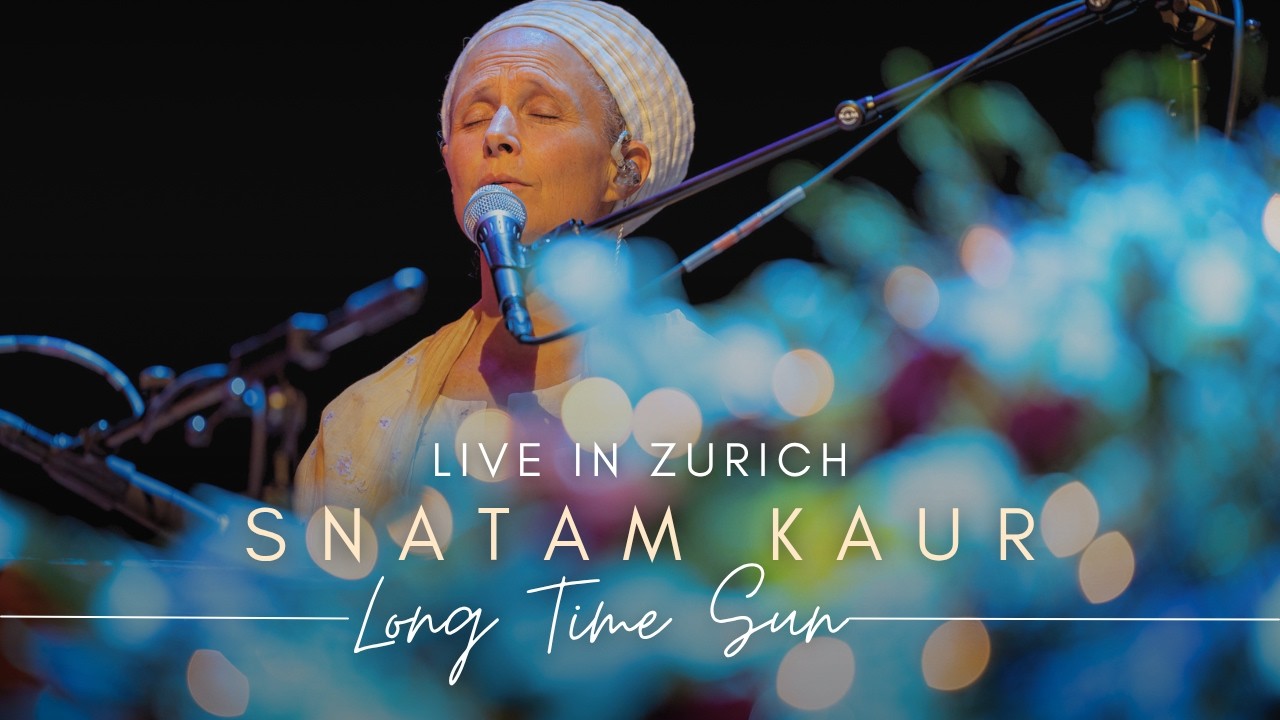
Long Time Sun: Kirtan and Blessing in Live Song
Featured

Long Time Sun: Kirtan and Blessing in Live Song

A live performance of the devotional blessing "Long Time Sun" recorded in Zurich featuring clarinet, three-part harmonies, and tabla.…

1 min read

Keep exploring

Continue your journey

More wisdom and gatherings from across the BrightStar directory.

More Articles

Browse the full library of teachings, interviews, and guides.

Back to all articles →

Teachers & Artists

Explore the lineages, musicians, and guides of the conscious world.

Explore artists →

Find an Event

Kirtan, retreats, sound baths, breathwork, festivals — happening soon.

Browse events →